Anthropic just launched Claude Design, and the reverberations are being felt well beyond the product and engineering teams it was built for.
Figma's stock dropped 9% within days of the release. Anthropic's Chief Product Officer resigned from Figma's board on April 14th — the same day reports emerged that Anthropic's next model would take direct aim at Figma's core offering. The Figma CEO's public response made clear this wasn't a friendly competitive nudge. It was a declaration.
For CMOs, the Figma angle is the most important part of this story — not because of the corporate drama, but because of what it signals. The design tooling your agencies, brand teams, and in-house studios have built their workflows around is now under direct pressure from AI-native alternatives. That shift has real implications for how you commission work, how fast you can move, and how much of your creative budget goes to production versus strategy.
The companies that treat this as a story about two tech firms fighting over developers will miss it entirely. This is a story about who controls the creative production layer — and how quickly that layer is being rebuilt from scratch.
What Claude Design actually does
Claude Design is Anthropic's AI-native design environment. You describe what you want to build, and it produces visual assets — landing pages, onboarding flows, presentation decks, 3D components — that you can refine through conversation or precise inline edits.
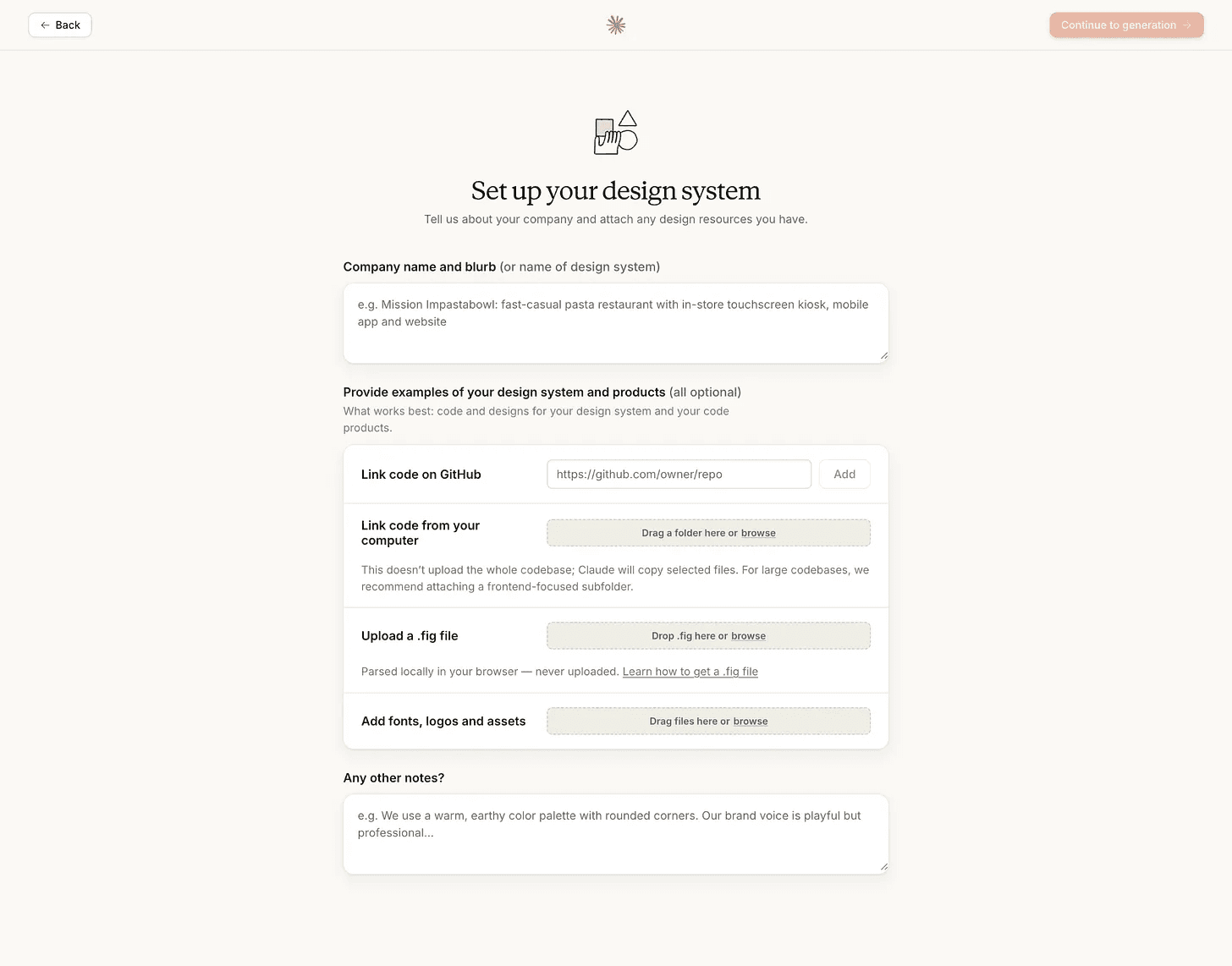
The setup is more considered than most AI tools. Before you build anything, you connect your existing brand system. Upload fonts, logos, and assets. Link your codebase or an existing Figma file. Claude reads your visual language and works within it. The output isn't generic AI design dropped into a vacuum — it's anchored to what your brand already looks like. That distinction matters significantly for marketing teams. A tool that ignores your brand system is a toy. A tool that internalises it and builds within it is a different category of asset entirely.
There are two ways to interact with the canvas once you're in it. Broad creative direction goes through chat — structural changes, new visual directions, requests for multiple variations, accessibility reviews. Precise execution happens inline — click directly on any element and tell it exactly what to change, without disrupting the wider conversation. This mirrors how good creative briefing actually works at the senior level: strategic direction from the top, precision at the execution layer. Claude Design has essentially baked that distinction into its interface.
The speed-to-market shift
Here's the marketing consequence that matters most: the gap between brief and first visual is now measured in minutes, not days.
A campaign landing page prototype. A stakeholder deck presenting three visual directions with pros, cons, and a recommendation tied to your specific growth targets. An animated product feature component built to your brand system. A full onboarding flow for a new product. All of these are now first-draft outputs you can brief and review in a single working session.
That doesn't eliminate the need for creative judgment — it front-loads it. The CMO's role shifts from approving work that took two weeks to produce to shaping the brief that generates the first draft in twenty minutes. The creative conversation starts earlier, involves fewer handoffs, and moves faster throughout.
Think about what that means at scale. A regional campaign adaptation that previously required a briefing document, an agency response, three rounds of revision, and a four-week timeline can now reach a reviewable first draft the same day the brief is written. A brand refresh exploration that once required expensive concepting sessions can be stress-tested visually before a single agency conversation happens.
For teams running multiple campaigns across markets, this changes capacity planning in a fundamental way. The bottleneck moves from production to direction. The constraint is no longer how fast your suppliers can execute — it's how clearly and quickly your team can brief. That's a different skill set, and the CMOs who develop it now will have a meaningful head start.
What this means for your agency relationships
The honest answer is that Claude Design doesn't replace agency relationships. But it does change what you need from them, and it changes the economics of what you're willing to pay for.
Production-heavy retainers that exist primarily to generate volume — multiple visual directions, iterative landing page variants, deck builds, format adaptations — are the most exposed. Not because the work disappears, but because the time and cost required to produce it drops sharply. If a first draft takes twenty minutes instead of two days, the conversation about what that work is worth changes whether you have it or not.
The agencies and creative partners who will hold their ground are the ones who bring what the tool cannot: genuine brand thinking, cultural instinct, the ability to read a room, and the creative judgment that no brief can fully specify. Claude Design surfaces that distinction faster than almost anything else has. When production becomes fast and cheap, the value of real creative thinking becomes more visible, not less.
This is worth communicating clearly to your internal teams and your agency partners before the shift happens to you rather than with you. The CMOs who get ahead of this conversation will manage it on their terms. The ones who don't will find their agencies on the defensive and their internal teams using the tools anyway, without a framework for how they fit into the wider creative process.
The vendor decision you may face sooner than expected
Your brand and marketing teams almost certainly use Figma. It sits in agency contracts, in internal design team toolkits, in the handoff workflows between marketing, product, and web development. It's the connective tissue of most modern brand operations.
Claude Design doesn't replace Figma today. It's a research preview, and it has limitations. The PowerPoint export was unresponsive during testing. Some workflows that should be seamless require workarounds. These are early-stage constraints that will close quickly, but they're real today.
What matters strategically is the direction of travel. Anthropic is building toward a closed loop — design to code, in a single environment, anchored to your brand system, with a direct handoff to development when you're done. When that loop closes properly, the question of where your team does its creative work becomes genuinely open in a way it hasn't been for years.
The time to form a view on this is now, not when a junior member of your team has already switched and half your creative assets are living in a tool your agencies don't support. Get into the tool, run a live brief through it, understand what it can and can't do, and build a position. That position might be "we'll monitor this for six months." It might be "we'll run a pilot with our in-house team." Either is valid. Having no position is not.
Where Claude Design fits in the wider AI stack
It helps to understand how Anthropic is positioning Claude Design relative to its other products, because the architecture tells you something about the ambition.
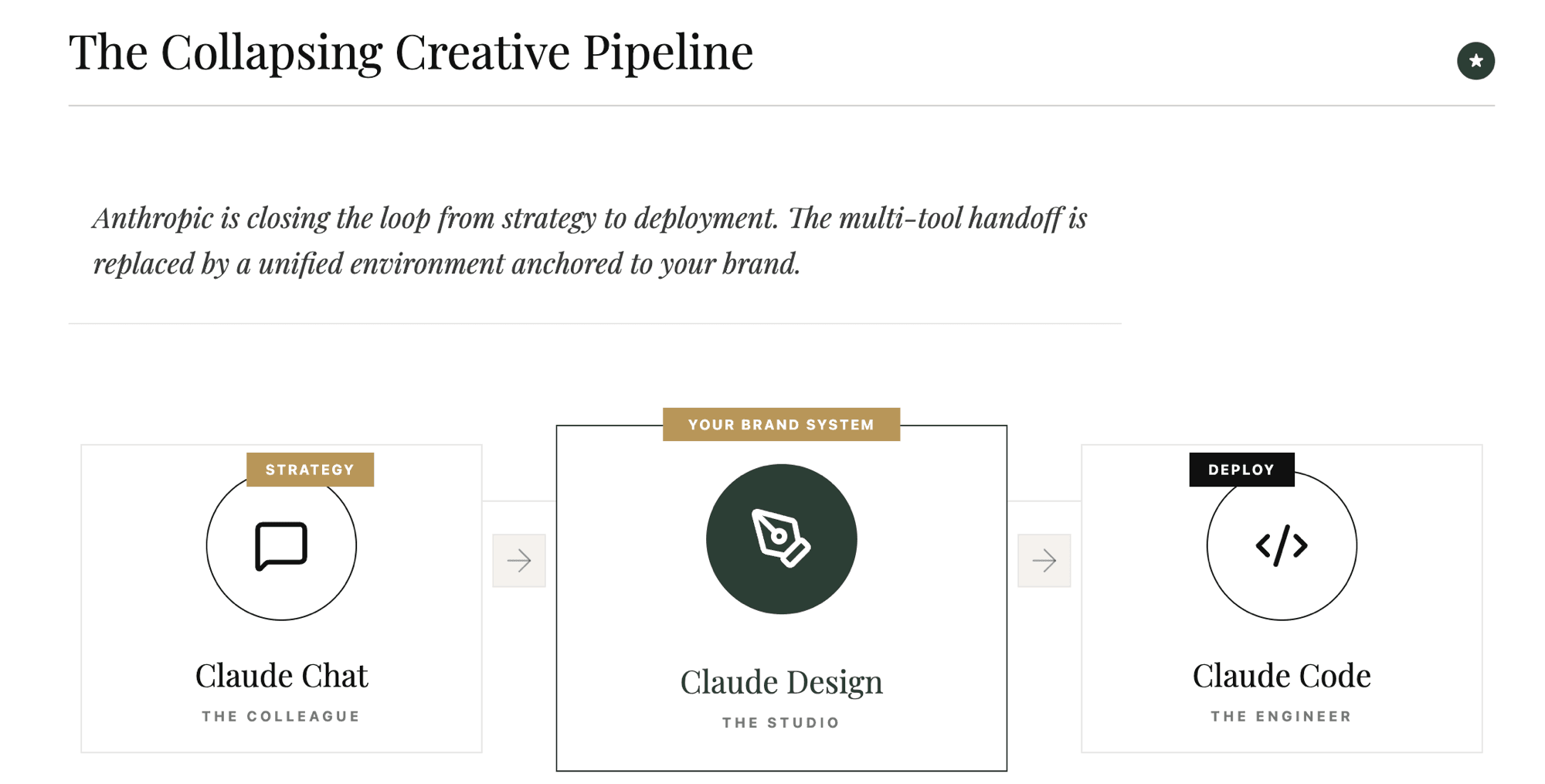
Claude Chat is the conversational interface most people are familiar with. Claude Code is the engineering environment — an AI that writes, tests, and ships code. Claude Design sits between them as the creative environment — the place where ideas take visual shape before they're handed to development.
The mental model Anthropic suggests is direct: Chat is a colleague you talk to, Code is an engineer you deploy, Design is a studio you experiment in. What that framing obscures slightly is how tightly integrated these layers are becoming. A design built in Claude Design can be handed off to Claude Code with a single command, which then creates a working local copy ready for development. The creative-to-production pipeline, which has historically required multiple tools, multiple handoffs, and multiple teams, is being collapsed into a single environment.
For marketing leaders, that integration matters because it means the gap between "we've approved this creative direction" and "this is live on our website" is about to get significantly shorter. The implications for campaign agility, rapid testing, and market responsiveness are substantial.
The practical starting point
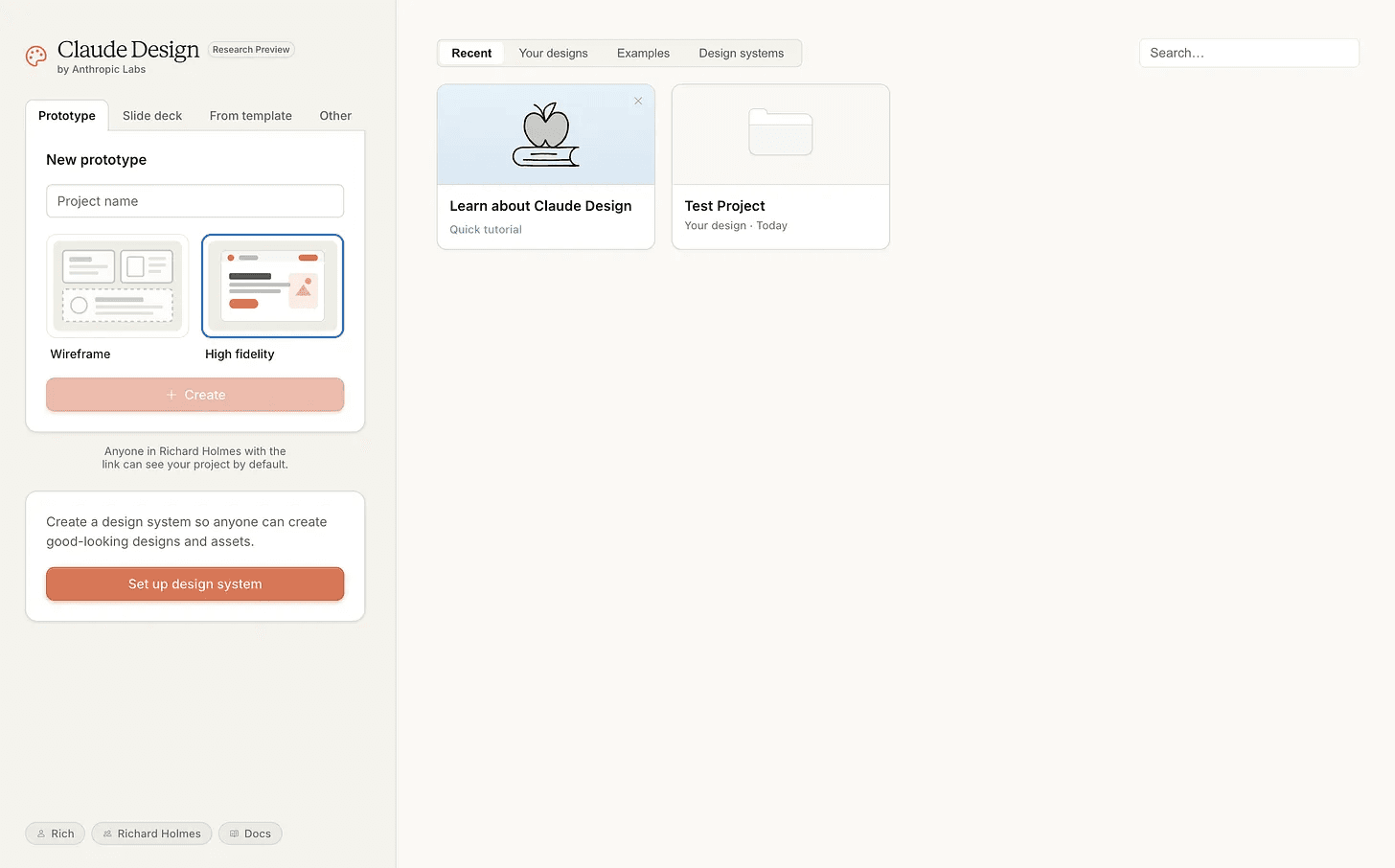
The best entry point into Claude Design is a live brief your team is already working on. Not a test, not a sandbox exercise — an actual piece of work. A campaign landing page, an onboarding flow for a product launch, a board presentation on brand direction. Run it through the tool and see what comes back.
Connect your design system before you start. The output quality difference between using Claude Design cold and using it with your brand assets loaded is significant. When Claude has your visual language, the first draft looks like yours. When it doesn't, it looks like everyone else's.
Use chat for the creative direction and inline editing for precision. Treat the first output as a brief response, not a finished asset — the value is in the speed of getting to something shaped and reviewable, not in the first draft being perfect. From there, iterate fast. The tool is built for it.
The signal underneath the tool
The competitive tension between Anthropic and Figma is a useful frame for something bigger that's happening across the creative industry. The traditional separation between thinking and making — strategy on one side, production on the other, with a long and expensive gap between them — is collapsing.
For marketing leaders, that's not a threat to manage defensively. It's a structural advantage, if you move with intent. The CMOs who build fluency with these tools now will compress campaign timelines, redirect budget toward the creative thinking that actually drives brand value, and brief more precisely than competitors still working through traditional production queues.
Claude Design is early. It has rough edges. It is already useful. And the direction it's heading is clear enough that waiting for it to be finished before forming a view is itself a strategic decision — just not a particularly good one.